
Publications
You can also find my articles on Google Scholar .
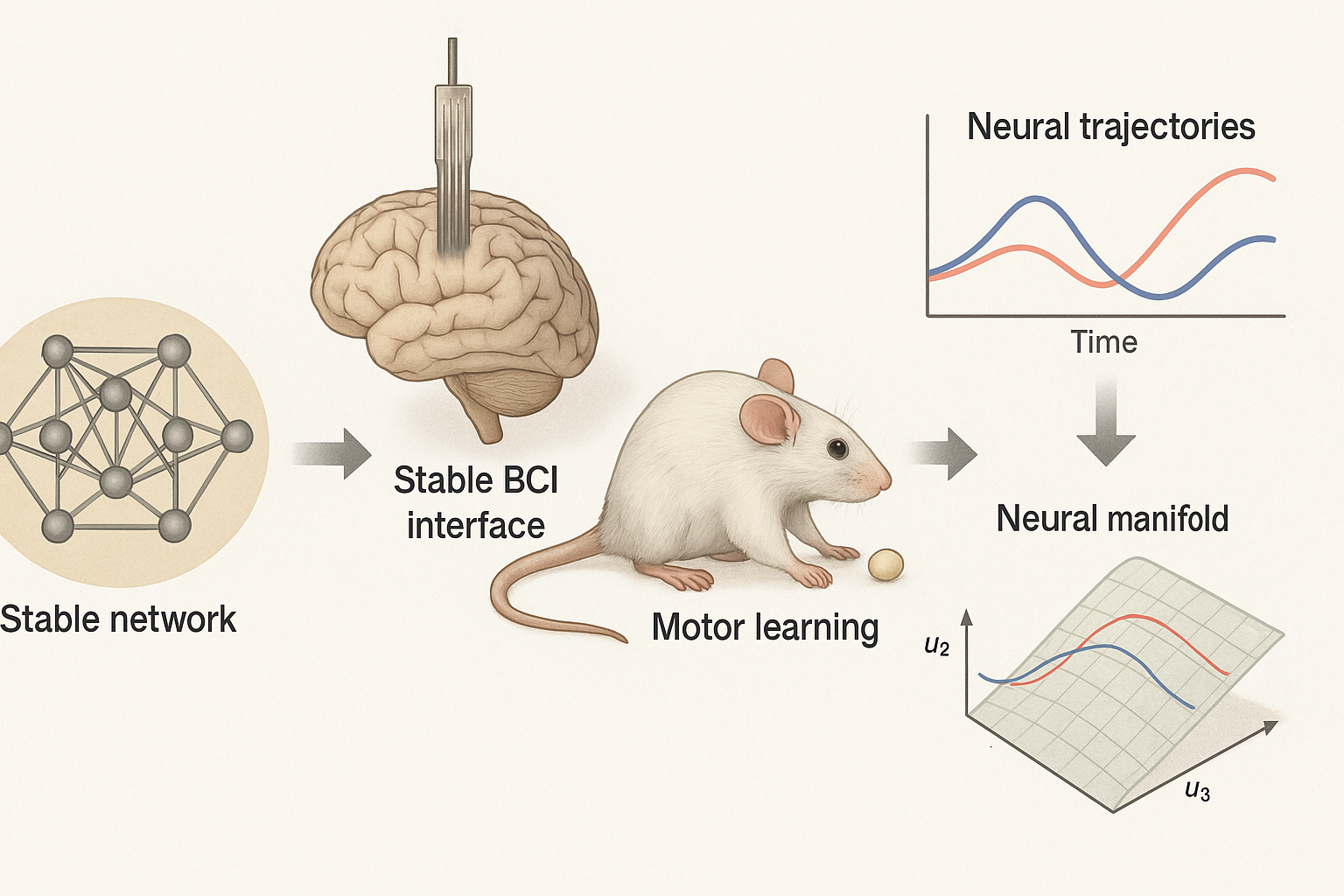
[1] Stable Neural Dynamics Tracking in Freely Moving Mice During Motor Skill Learning via Ultra-flexible, High-density Electrodes.
In this project, we used ultra-flexible, high-density NET electrodes to track the same population of motor-cortex neurons in freely moving mice as they learned a skilled reach-and-grasp task over multiple weeks. By combining automated behavioral training, DeepLabCut-based kinematic tracking, and large-scale single-unit recordings, we mapped how neural representations evolve with practice. Our analysis revealed that individual neurons show diverse tuning changes, while the population as a whole undergoes a gradual geometric reshaping of its latent neural manifold—marked by increased trajectory scaling as movements become more refined. These long-term, stable population features enabled more accurate decoding of movement kinematics and shed light on how the brain balances plasticity and stability during skill acquisition. This work provides a foundation for designing adaptive motor BCIs and rehabilitation strategies that leverage the structure of evolving neural population dynamics.
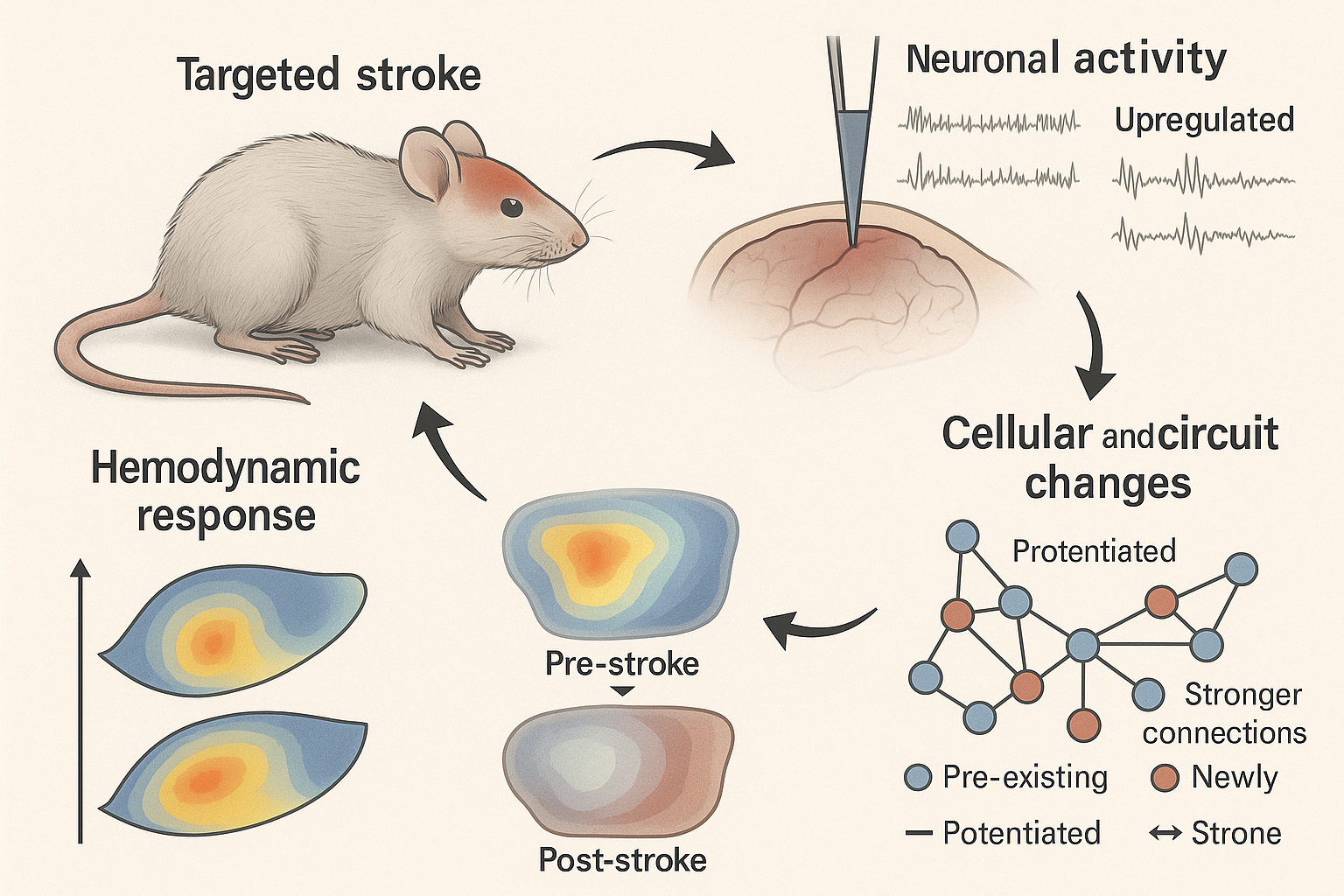
[2] Stroke-Induced Plasticity Involves Both Recruitment of New Neurons and Potentiation of Pre-existing Ones
Our work uncovers how the brain reorganizes itself after a highly focal stroke by tracking single-neuron spiking and population dynamics over weeks using ultraflexible, high-density NET electrodes. By creating a precise, single-barrel microinfarct and recording from both nearby and distant cortical regions, we found that stroke does not trigger a large-scale remapping of sensory representations as previously believed. Instead, recovery emerges from a combination of potentiation of pre-existing functional neurons and the recruitment of previously silent cells, while nearby tissue remains strongly suppressed. Through longitudinal single-unit tracking and multimodal imaging, we show a clear dissociation between hemodynamic signals and neural activity, emphasizing the need for direct electrophysiological measurements after injury. These findings reshape our understanding of post-stroke plasticity and point toward targeted, circuit-specific strategies for rehabilitation and adaptive neurotechnologies.
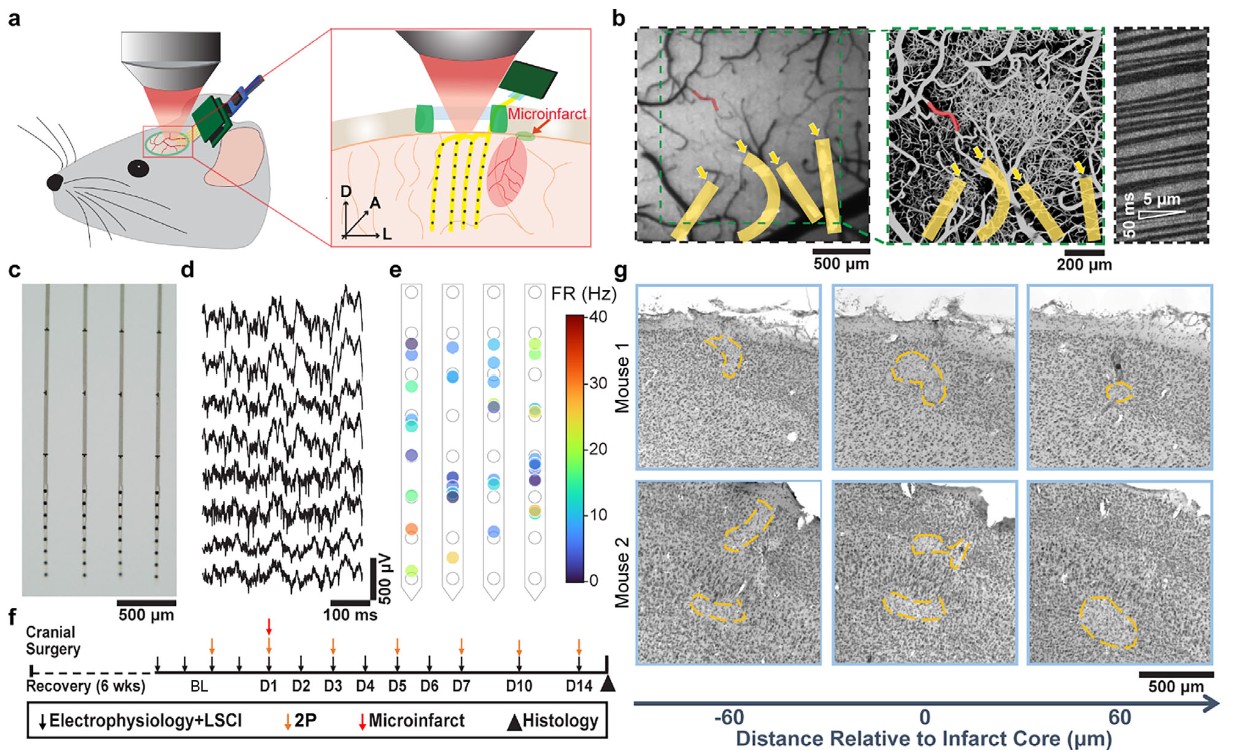
[3] Longitudinal, Multimodal Tracking Reveals Lasting Neurovascular Impact of Individual Microinfarcts.
Microinfarcts, the “invisible lesions”, are prevalent in aged and injured brainsand associated with cognitive impairments, yet their neurophysiologicalimpact remains largely unknown. Using a multimodal chronic neural platformthat combines functional microvasculature imaging with spatially resolvedneural recording, the neurovascular effect of a single microinfarct isinvestigated. Unlike larger strokes, microinfarcts induced only temporarysuppression of neural activity with minimal cell death, with recoveryparalleling vasculature remodeling at the infarct core. Neural activity is moreseverely suppressed at the shallower cortical layer despite milder vasculardamage compared to deeper layers, and the excitability of fast-spikinginterneurons attenuation is accompanied by heightened bursting of regularspiking neurons. Spike phase locking at the low-gamma band is disrupted,indicating a lasting impairment of long-range assembly communication.These results highlight the subtle yet significant neurovascular disruptions ofa single microinfarct.
View Paper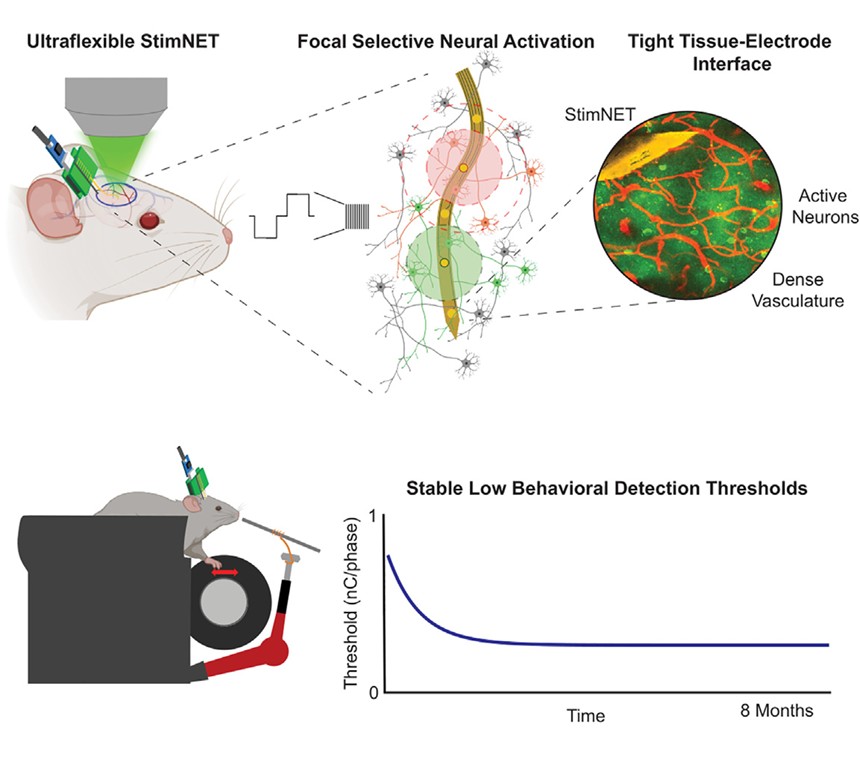
[4] Low-threshold, high-resolution, chronically stable intracortical microstimulation by ultraflexible electrodes.
Intracortical microstimulation (ICMS) enables applications ranging from neuroprosthetics to causal circuit manipulations. However, the resolution, efficacy, and chronic stability of neuromodulation are often compro mised by adverse tissue responses to the indwelling electrodes. Here we engineer ultraflexible stim-nanoe lectronic threads (StimNETs) and demonstrate low activation threshold, high resolution, and chronically stable ICMS in awake, behaving mouse models. In vivo two-photon imaging reveals that StimNETs remain seamlessly integrated with the nervous tissue throughout chronic stimulation periods and elicit stable, focal neuronal activation at low currents of 2 mA. Importantly, StimNETs evoke longitudinally stable behavioral responses for over 8 months at a markedly low charge injection of 0.25 nC/phase. Quantified histological analyses show that chronic ICMS by StimNETs induces no neuronal degeneration or glial scarring. These results suggest that tissue-integrated electrodes provide a path for robust, long-lasting, spatially selective neuromodulation at low currents, which lessens risk of tissue damage or exacerbation of off-target side effects.
View Paper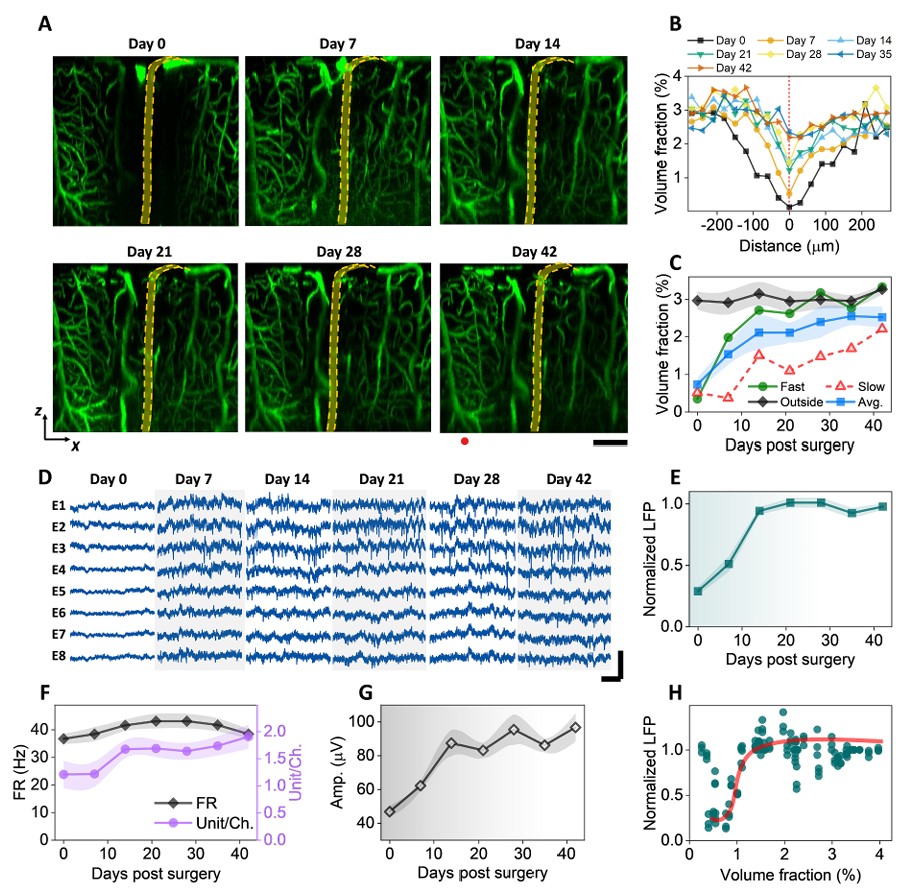
[5] Longitudinal neural and vascular recovery following ultraflexible neural electrode implantation in aged mice.
Flexible neural electrodes improve the recording longevity and quality of individual neurons by promoting tissue-electrode integration. However, the intracortical implantation of flexible electrodes inevitably induces tissue damage. Understanding the longitudinal neural and vascular recovery following the intracortical implantation is critical for the ever-growing applications of flexible electrodes in both healthy and disordered brains. Aged animals are of particular interest because they play a key role in modeling neurological disorders, but their tissue-electrode interface remains mostly unstudied. Here we integrate in-vivo two-photon imaging and electrophysiological recording to determine the time-dependent neural and vascular dynamics after the implantation of ultraflexible neural electrodes in aged mice. We find heightened angiogenesis and vascular remodeling in the first two weeks after implantation, which coincides with the rapid increase in local field potentials and unit activities detected by electrophysiological recordings. Vascular remodeling in shallow cortical layers preceded that in deeper layers, which often lasted longer than the recovery of neural signals. By six weeks post-implantation vascular abnormalities had subsided, resulting in normal vasculature and microcirculation. Putative cell classification based on firing pattern and waveform shows similar recovery time courses in fast-spiking interneurons and pyramidal neurons. These results elucidate how structural damages and remodeling near implants affecting recording efficacy, and support the application of ultraflexible electrodes in aged animals at minimal perturbations to endogenous neurophysiology.
View Paper